
自定义策略图
策略图是 Koog 框架中智能体工作流的核心。它们定义了智能体如何处理输入、与工具交互以及生成输出。策略图由通过边连接的节点组成,执行流程由条件决定。
通过创建策略图,你可以根据特定需求定制智能体的行为,无论是构建简单的聊天机器人、复杂的数据处理流水线,还是介于两者之间的任何应用。
策略图架构
从高层级来看,策略图由以下组件组成:
- 策略 (Strategy):图的顶级容器,使用
strategy函数创建,并通过泛型参数指定输入和输出类型。 - 子图 (Subgraphs):图的各个部分,可以拥有自己的一套工具和上下文。
- 节点 (Nodes):工作流中的单个操作或转换。
- 边 (Edges):节点之间的连接,定义了转换条件和转换逻辑。
策略图从名为 nodeStart 的特殊节点开始,到 nodeFinish 结束。这些节点之间的路径由图中指定的边和条件决定。
策略图组件
节点
节点是策略图的构建块。每个节点代表一个特定的操作。
Koog 框架提供了预定义节点,同时也允许你使用 node 函数创建自定义节点。
边
边连接节点并定义策略图中的操作流。使用 edge 函数和 forwardTo 中缀函数创建边:
=== "Kotlin"
<!--- INCLUDE
import ai.koog.agents.core.dsl.builder.strategy
import ai.koog.agents.core.dsl.builder.node
import ai.koog.agents.core.dsl.builder.parallel
import ai.koog.agents.core.dsl.builder.subgraph
val strategy = strategy<String, String>("strategy_name") {
        val sourceNode by node<String, String> { input -> input }
        val targetNode by node<String, String> { input -> input }
-->
<!--- SUFFIX
}
-->
```kotlin
edge(sourceNode forwardTo targetNode)
```
<!--- KNIT example-custom-strategy-graphs-01.kt -->
=== "Java"
<!--- INCLUDE
import ai.koog.agents.core.agent.entity.AIAgentGraphStrategy;
import ai.koog.agents.core.agent.entity.AIAgentNode;
class exampleCustomStrategyGraphsJava01 {
    public static void main(String[] args) {
        var strategy = AIAgentGraphStrategy.builder("strategyName")
            .withInput(String.class)
            .withOutput(String.class);
        var sourceNode = AIAgentNode.builder("source")
            .withInput(String.class)
            .withOutput(String.class)
            .withAction((input, ctx) -> input)
            .build();
        var targetNode = AIAgentNode.builder("target")
            .withInput(String.class)
            .withOutput(String.class)
            .withAction((input, ctx) -> input)
            .build();
-->
<!--- SUFFIX
    }
}
-->
```java
strategy.edge(sourceNode, targetNode);
```
<!--- KNIT exampleCustomStrategyGraphsJava01.java -->
条件
条件决定何时沿策略图中的特定边执行。有多种类型的条件,以下是一些常见的:
| 条件类型 | 描述 |
|---|---|
| onCondition | 通用条件,接受一个返回布尔值的 lambda表达式。 |
| onToolCalls | 当 LLM 调用一个或多个工具时匹配的条件。 |
| onTextMessage | 当 LLM 以文本消息形式响应时匹配的条件。 |
| onToolNotCalled | 当 LLM 未调用工具时匹配的条件。 |
在将输出传递给目标节点之前,你可以使用 transformed 函数对其进行转换:
=== "Kotlin"
<!--- INCLUDE
import ai.koog.agents.core.dsl.builder.strategy
import ai.koog.agents.core.dsl.builder.node
import ai.koog.agents.core.dsl.builder.parallel
import ai.koog.agents.core.dsl.builder.subgraph
val strategy = strategy<String, String>("strategy_name") {
        val sourceNode by node<String, String> { input -> input }
        val targetNode by node<String, String> { input -> input }
-->
<!--- SUFFIX
}
-->
```kotlin
edge(sourceNode forwardTo targetNode
        onCondition { input -> input.length > 10 }
        transformed { input -> input.uppercase() }
)
```
<!--- KNIT example-custom-strategy-graphs-02.kt -->
=== "Java"
<!--- INCLUDE
import ai.koog.agents.core.agent.entity.AIAgentEdge;
import ai.koog.agents.core.agent.entity.AIAgentGraphStrategy;
import ai.koog.agents.core.agent.entity.AIAgentNode;
class exampleCustomStrategyGraphsJava02 {
    public static void main(String[] args) {
        var strategy = AIAgentGraphStrategy.builder("strategyName")
            .withInput(String.class)
            .withOutput(String.class);
        var sourceNode = AIAgentNode.builder("source")
            .withInput(String.class)
            .withOutput(String.class)
            .withAction((input, ctx) -> input)
            .build();
        var targetNode = AIAgentNode.builder("target")
            .withInput(String.class)
            .withOutput(String.class)
            .withAction((input, ctx) -> input)
            .build();
-->
<!--- SUFFIX
    }
}
-->
```java
strategy.edge(AIAgentEdge.builder()
    .from(sourceNode)
    .to(targetNode)
    .onCondition(input -> input.length() > 10)
    .transformed(input -> input.toUpperCase())
    .build());
```
<!--- KNIT exampleCustomStrategyGraphsJava02.java -->
子图
子图是策略图的一部分,使用自己的一套工具和上下文运行。策略图可以包含多个子图。每个子图使用 subgraph 函数定义:
=== "Kotlin"
<!--- INCLUDE
import ai.koog.agents.core.dsl.builder.strategy
import ai.koog.agents.core.dsl.builder.node
import ai.koog.agents.core.dsl.builder.parallel
import ai.koog.agents.core.dsl.builder.subgraph
typealias Input = String
typealias Output = Int
typealias FirstInput = String
typealias FirstOutput = Int
typealias SecondInput = String
typealias SecondOutput = Int
-->
```kotlin
val strategy = strategy<Input, Output>("strategy-name") {
    val firstSubgraph by subgraph<FirstInput, FirstOutput>("first") {
        // 为该子图定义节点和边
    }
    val secondSubgraph by subgraph<SecondInput, SecondOutput>("second") {
        // 为该子图定义节点和边
    }
}
```
<!--- KNIT example-custom-strategy-graphs-03.kt -->
=== "Java"
<!--- INCLUDE
import ai.koog.agents.core.agent.entity.AIAgentSubgraph;
class exampleCustomStrategyGraphsJava03 {
    class FirstInput {}
    class FirstOutput {}
    class SecondInput {}
    class SecondOutput {}
    public static void main(String[] args) {
-->
<!--- SUFFIX
    }
}
-->
```java
var firstSubgraph = AIAgentSubgraph.builder("first")
    .withInput(FirstInput.class)
    .withOutput(FirstOutput.class)
    .define(subgraph -> {
        // 为该子图定义节点和边
    })
    .build();

var secondSubgraph = AIAgentSubgraph.builder("second")
    .withInput(SecondInput.class)
    .withOutput(SecondOutput.class)
    .define(subgraph -> {
        // 为该子图定义节点和边
    })
    .build();
```
<!--- KNIT exampleCustomStrategyGraphsJava03.java -->
子图可以使用工具注册表中的任何工具。但是,你可以从该注册表中指定一个可在子图中使用的工具子集,并将其作为参数传递给 subgraph 函数:
=== "Kotlin"
<!--- INCLUDE
import ai.koog.agents.core.dsl.builder.strategy
import ai.koog.agents.core.dsl.builder.node
import ai.koog.agents.core.dsl.builder.parallel
import ai.koog.agents.core.dsl.builder.subgraph
import ai.koog.agents.ext.tool.SayToUser
typealias Input = String
typealias Output = Int
typealias FirstInput = String
typealias FirstOutput = Int
val someTool = SayToUser
-->
```kotlin
val strategy = strategy<Input, Output>("strategy-name") {
    val firstSubgraph by subgraph<FirstInput, FirstOutput>(
        name = "first",
        tools = listOf(someTool)
    ) {
        // 为该子图定义节点和边
    }
   // 定义其他子图
}
```
<!--- KNIT example-custom-strategy-graphs-04.kt -->
=== "Java"
<!--- INCLUDE
import ai.koog.agents.core.agent.entity.AIAgentSubgraph;
import ai.koog.agents.core.tools.reflect.ToolSet;
class exampleCustomStrategyGraphsJava04 {
    class FirstInput {}
    class FirstOutput {}
    static ToolSet someTools = null;
    public static void main(String[] args) {
-->
<!--- SUFFIX
    }
}
-->
```java
var firstSubgraph = AIAgentSubgraph.builder("first")
    .withInput(FirstInput.class)
    .withOutput(FirstOutput.class)
    .limitedTools(someTools)
    .define(subgraph -> {
        // 为该子图定义节点和边
    })
    .build();
```
<!--- KNIT exampleCustomStrategyGraphsJava04.java -->
基础策略图创建
基础策略图的运行方式如下:
- 将输入发送给 LLM。
- 如果 LLM 以消息形式响应,则结束流程。
- 如果 LLM 调用工具,则运行该工具。
- 将工具结果发送回 LLM。
- 如果 LLM 以消息形式响应,则结束流程。
- 如果 LLM 调用另一个工具,则运行该工具,并从第 4 步开始重复该过程。
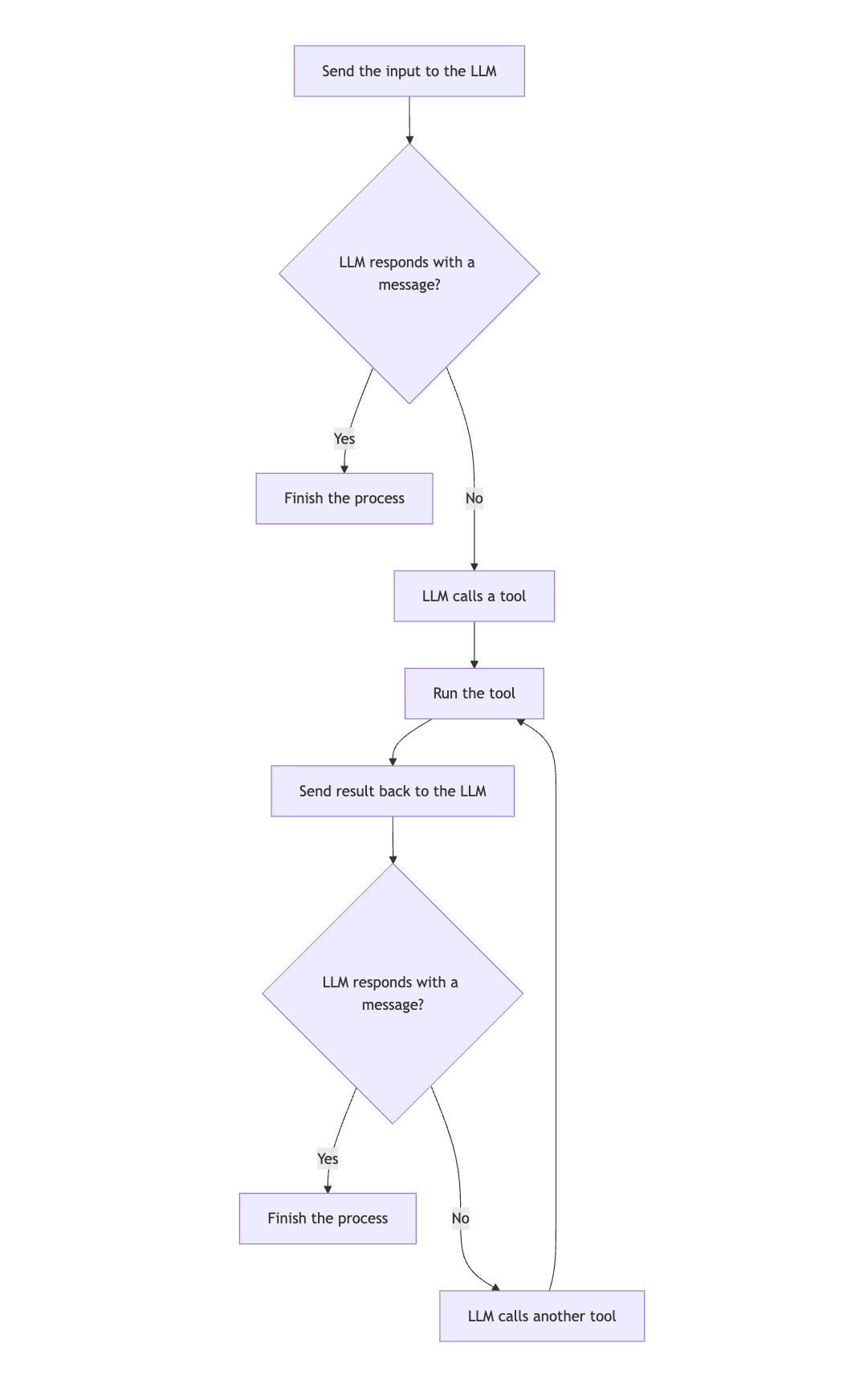
以下是一个基础策略图的示例:
=== "Kotlin"
<!--- INCLUDE
import ai.koog.agents.core.dsl.builder.strategy
import ai.koog.agents.core.dsl.builder.node
import ai.koog.agents.core.dsl.builder.parallel
import ai.koog.agents.core.dsl.builder.subgraph
import ai.koog.agents.core.dsl.extension.nodeExecuteTools
import ai.koog.agents.core.dsl.extension.nodeLLMRequest
import ai.koog.agents.core.dsl.extension.nodeLLMSendToolResults
import ai.koog.agents.core.dsl.extension.onTextMessage
import ai.koog.agents.core.dsl.extension.onToolCalls
-->
```kotlin
val myStrategy = strategy<String, String>("my-strategy") {
    val nodeCallLLM by nodeLLMRequest()
    val executeToolCall by nodeExecuteTools()
    val sendToolResult by nodeLLMSendToolResults()

    edge(nodeStart forwardTo nodeCallLLM)
    edge(nodeCallLLM forwardTo nodeFinish onTextMessage { true })
    edge(nodeCallLLM forwardTo executeToolCall onToolCalls { true })
    edge(executeToolCall forwardTo sendToolResult)
    edge(sendToolResult forwardTo nodeFinish onTextMessage { true })
    edge(sendToolResult forwardTo executeToolCall onToolCalls { true })
}
```
<!--- KNIT example-custom-strategy-graphs-05.kt -->
=== "Java"
<!--- INCLUDE
import ai.koog.agents.core.agent.entity.AIAgentEdge;
import ai.koog.agents.core.agent.entity.AIAgentGraphStrategy;
import ai.koog.agents.core.agent.entity.AIAgentNode;
import ai.koog.prompt.message.Message;
import ai.koog.prompt.message.MessagePart;
import java.util.stream.Collectors;
class exampleCustomStrategyGraphsJava05 {
    public static void main(String[] args) {
-->
<!--- SUFFIX
    }
}
-->
```java
var graph = AIAgentGraphStrategy.builder("single_run")
    .withInput(String.class)
    .withOutput(String.class);

var nodeCallLLM = AIAgentNode.llmRequest("sendInput");
var nodeExecuteTool = AIAgentNode.executeTools("nodeExecuteTool");
var nodeSendToolResult = AIAgentNode.llmSendToolResults("nodeSendToolResult");

graph.edge(AIAgentEdge.builder()
    .from(graph.nodeStart)
    .to(nodeCallLLM)
    .build());

graph.edge(AIAgentEdge.builder()
    .from(nodeCallLLM)
    .to(nodeExecuteTool)
    .onToolCalls()
    .build());

graph.edge(AIAgentEdge.builder()
    .from(nodeCallLLM)
    .to(graph.nodeFinish)
    .onTextMessage()
    .build());

graph.edge(nodeExecuteTool, nodeSendToolResult);

graph.edge(AIAgentEdge.builder()
    .from(nodeSendToolResult)
    .to(graph.nodeFinish)
    .onTextMessage()
    .build());

graph.edge(AIAgentEdge.builder()
    .from(nodeSendToolResult)
    .to(nodeExecuteTool)
    .onToolCalls()
    .build());

var strategy = graph.build();
```
<!--- KNIT exampleCustomStrategyGraphsJava05.java -->
可视化策略图
在 JVM 上,你可以为策略图生成 Mermaid 状态图。
对于上一个示例中创建的图,你可以运行:
=== "Kotlin"
<!--- INCLUDE
import ai.koog.agents.core.agent.asMermaidDiagram
import ai.koog.agents.core.dsl.builder.strategy
import ai.koog.agents.core.dsl.builder.node
import ai.koog.agents.core.dsl.builder.parallel
import ai.koog.agents.core.dsl.builder.subgraph
import ai.koog.agents.core.dsl.extension.nodeExecuteTools
import ai.koog.agents.core.dsl.extension.nodeLLMRequest
import ai.koog.agents.core.dsl.extension.nodeLLMSendToolResults
import ai.koog.agents.core.dsl.extension.onTextMessage
import ai.koog.agents.core.dsl.extension.onToolCalls
fun main() {
    val myStrategy = strategy<String, String>("my-strategy") {
        val nodeCallLLM by nodeLLMRequest()
        val executeToolCall by nodeExecuteTools()
        val sendToolResult by nodeLLMSendToolResults()
        edge(nodeStart forwardTo nodeCallLLM)
        edge(nodeCallLLM forwardTo nodeFinish onTextMessage { true })
        edge(nodeCallLLM forwardTo executeToolCall onToolCalls { true })
        edge(executeToolCall forwardTo sendToolResult)
        edge(sendToolResult forwardTo nodeFinish onTextMessage { true })
        edge(sendToolResult forwardTo executeToolCall onToolCalls { true })
    }
-->
<!--- SUFFIX
}
-->

```kotlin
val mermaidDiagram: String = myStrategy.asMermaidDiagram()

println(mermaidDiagram)
```
<!--- KNIT example-custom-strategy-graphs-06.kt -->
=== "Java"
<!--- INCLUDE
import ai.koog.agents.core.agent.MermaidDiagramGenerator;
import ai.koog.agents.core.agent.entity.AIAgentGraphStrategy;
class exampleCustomStrategyGraphsJava06 {
    public static void main(String[] args) {
        var myStrategy = AIAgentGraphStrategy.builder("single_run")
            .withInput(String.class)
            .withOutput(String.class)
            .build();
-->
<!--- SUFFIX
    }
}
-->
```java
var mermaidDiagram = MermaidDiagramGenerator.INSTANCE.generate(myStrategy);
System.out.println(mermaidDiagram);
```
<!--- KNIT exampleCustomStrategyGraphsJava06.java -->
输出将是:
---
title: my-strategy
---
stateDiagram
    state "nodeCallLLM" as nodeCallLLM
    state "executeToolCall" as executeToolCall
    state "sendToolResult" as sendToolResult

    [*] --> nodeCallLLM
    nodeCallLLM --> [*] : transformed
    nodeCallLLM --> executeToolCall : onCondition
    executeToolCall --> sendToolResult
    sendToolResult --> [*] : transformed
    sendToolResult --> executeToolCall : onCondition
高级策略技巧
历史压缩
对于长时间运行的对话,历史记录可能会变得很大并消耗大量 token。要了解如何压缩历史记录,请参阅历史压缩。
并行工具执行
对于需要并行执行多个工具的工作流,可以使用 nodeExecuteTools 节点,并设置 parallel = true:
val executeMultipleTools by nodeExecuteTools(parallel = true)
val processMultipleResults by nodeLLMSendToolResults()

edge(someNode forwardTo executeMultipleTools)
edge(executeMultipleTools forwardTo processMultipleResults)
你还可以对流数据使用 toParallelToolCallsRaw 扩展函数:
parseMarkdownStreamToBooks(markdownStream).toParallelToolCallsRaw(BookTool::class).collect()要了解更多信息,请参阅工具。
并行节点执行
并行节点执行允许你并发运行多个节点,从而提高性能并启用复杂的工作流。
要发起并行节点运行,请使用 parallel 方法:
val calc by parallel<String, Int>(
    nodeCalcTokens, nodeCalcSymbols, nodeCalcWords,
) {
    selectByMax { it }
}
上述代码创建了一个名为 calc 的节点,它并行运行 nodeCalcTokens、nodeCalcSymbols 和 nodeCalcWords 节点,并将结果作为 AsyncParallelResult 实例返回。
有关并行节点执行的更多信息和详细参考,请参阅并行节点执行。
条件分支
对于需要根据某些条件采取不同路径的复杂工作流,可以使用条件分支:
val branchA by node<String, String> { input ->
    // 分支 A 的逻辑
    "Branch A: $input"
}

val branchB by node<String, String> { input ->
    // 分支 B 的逻辑
    "Branch B: $input"
}

edge(
    (someNode forwardTo branchA)
            onCondition { input -> input.contains("A") }
)
edge(
    (someNode forwardTo branchB)
            onCondition { input -> input.contains("B") }
)
最佳做法
创建自定义策略图时,请遵循以下最佳做法:
- 保持简单。从简单的图开始,并根据需要增加复杂性。
- 为节点和边提供描述性名称,使图更易于理解。
- 处理所有可能的路径和边缘情况。
- 使用各种输入测试你的图,以确保其行为符合预期。
- 记录图的用途和行为,以备将来参考。
- 使用预定义策略或常见模式作为起点。
- 对于长时间运行的对话,使用历史压缩来减少 token 使用量。
- 使用子图来组织你的图并管理工具访问。
使用示例
语气分析策略
语气分析策略是基于工具的策略的一个很好的例子,它包含了历史压缩:
fun toneStrategy(name: String, toolRegistry: ToolRegistry): AIAgentGraphStrategy<String, String> {
    return strategy(name) {
        val nodeSendInput by nodeLLMRequest()
        val nodeExecuteTool by nodeExecuteTools()
        val nodeSendToolResult by nodeLLMSendToolResults()
        val nodeCompressHistory by nodeLLMCompressHistory<ReceivedToolResults>()

        // 定义智能体的流程
        edge(nodeStart forwardTo nodeSendInput)

        // 如果 LLM 以消息形式响应,则结束
        edge(
            (nodeSendInput forwardTo nodeFinish)
                onTextMessage { true }
        )

        // 如果 LLM 调用工具,则执行它
        edge(
            (nodeSendInput forwardTo nodeExecuteTool)
                    onToolCalls { true }
        )

        // 如果历史记录变得太大,则进行压缩
        edge(
            (nodeExecuteTool forwardTo nodeCompressHistory)
                    onCondition { _ -> llm.readSession { prompt.messages.size > 100 } }
        )

        edge(nodeCompressHistory forwardTo nodeSendToolResult)

        // 否则,直接发送工具结果
        edge(
            (nodeExecuteTool forwardTo nodeSendToolResult)
                    onCondition { _ -> llm.readSession { prompt.messages.size <= 100 } }
        )

        // 如果 LLM 调用另一个工具,则执行它
        edge(
            (nodeSendToolResult forwardTo nodeExecuteTool)
                    onToolCalls { true }
        )

        // 如果 LLM 以消息形式响应,则结束
        edge(
            (nodeSendToolResult forwardTo nodeFinish)
                onTextMessage { true }
        )
    }
}
该策略执行以下操作:
- 将输入发送给 LLM。
- 如果 LLM 以消息形式响应,策略将结束流程。
- 如果 LLM 调用工具,策略将运行该工具。
- 如果历史记录太大(超过 100 条消息),策略会在发送工具结果之前先压缩历史记录。
- 否则,策略直接发送工具结果。
- 如果 LLM 调用另一个工具,策略将运行它。
- 如果 LLM 以消息形式响应,策略将结束流程。
故障排除
创建自定义策略图时,你可能会遇到一些常见问题。以下是一些故障排除提示:
图无法到达结束节点
如果你的图没有到达结束节点,请检查以下内容:
- 从开始节点出发的所有路径最终都能通向结束节点。
- 你的条件没有过于严格,从而阻止了边的执行。
- 图中没有缺少退出条件的循环。
工具调用未运行
如果工具调用未运行,请检查以下内容:
- 工具已在工具注册表中正确注册。
- 从 LLM 节点到工具执行节点的边具有正确的条件(
onToolCall { true })。
历史记录变得太大
如果你的历史记录变得太大并消耗过多 token,请考虑以下事项:
- 添加历史压缩节点。
- 使用条件检查历史记录的大小,并在其过大时进行压缩。
- 使用更激进的压缩策略(例如,使用较小 N 值的
FromLastNMessages)。
图的行为不符合预期
如果你的图进入了意料之外的分支,请检查以下内容:
- 你的条件定义正确。
- 条件按预期的顺序进行评估(边按定义的顺序进行检查)。
- 你没有意外地用更通用的条件覆盖了特定条件。
出现性能问题
如果你的图存在性能问题,请考虑以下事项:
- 通过移除不必要的节点和边来简化图。
- 对独立操作使用并行工具执行。
- 压缩历史记录。
- 使用更高效的节点和操作。